Match 3D Saga - Puzzle Games
- 4.8
- Rating
- 1.00M
- Installs
- Free
- Price

 Analysis by App-foxy
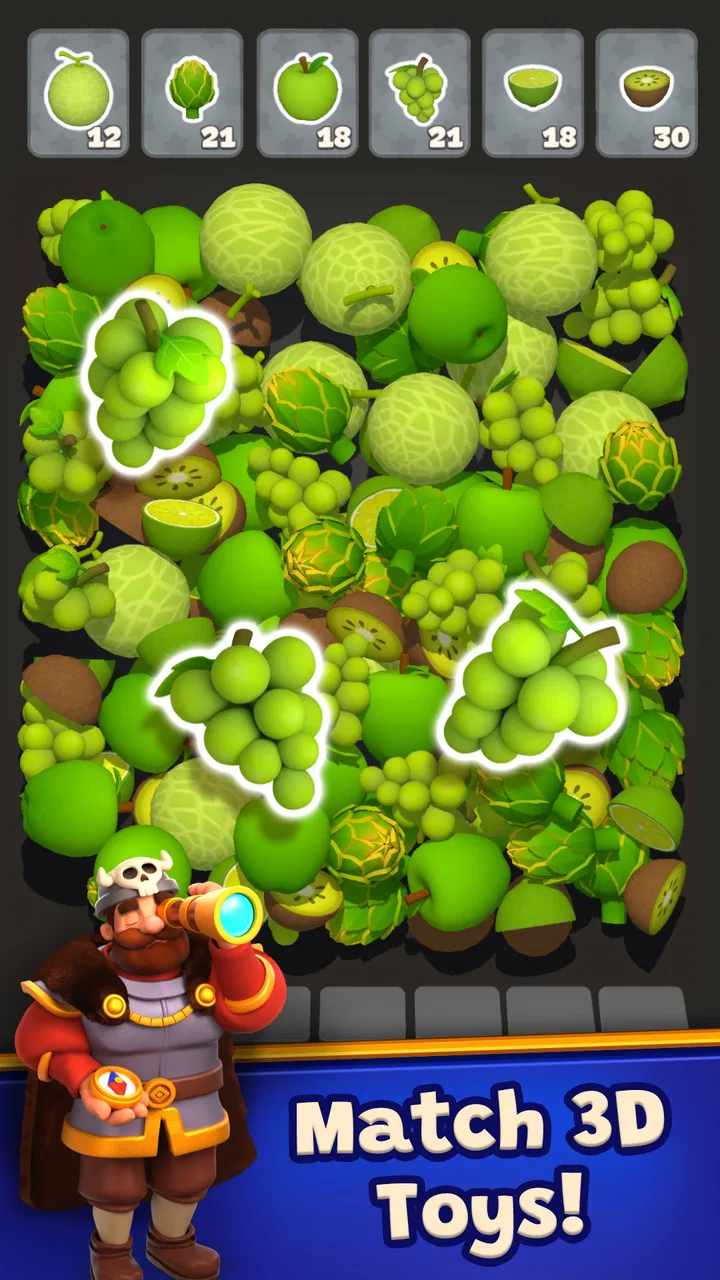
I approached Match 3D Saga - Puzzle Games as the sort of game you open when you want a quick mental reset rather than a long story or complicated strategy system. It is a free puzzle game from Games Vessel, built around finding and combining matching three-dimensional objects. The idea is easy to understand, but the changing layouts and visual clutter give each round more tension than the basic premise suggests.
My first impression was that it is designed to make the opening moments comfortable for newcomers. You do not need to learn a fictional world, manage a character, or memorize a large rulebook. The focus is immediately on looking carefully, identifying a set of three identical items, and deciding which objects to remove first. That simplicity makes it approachable, while the three-dimensional presentation gives the familiar matching formula a different feel from a traditional flat tile puzzle.
What to expect when you begin
The game belongs firmly in the casual puzzle space, but it is not just a passive matching exercise. The useful skill is visual organization. Objects overlap, compete for attention, and can be easier or harder to recognize depending on their position. I found that the challenge comes less from knowing what to do and more from choosing the right order before the available space becomes awkward.
You May Also Like

 Blood Strike: 2.5 Anniversary
Blood Strike’s Loadouts Turn Every Drop Into a Tactical Gamble
A close look at Blood Strike’s custom loadouts: how fast access to signature weapons reshapes its battle royale rhythm, rewards preparation, and narrows the gap between fights.

 Pandora - Music & Podcasts
Pandora’s Music Is Easy to Start, but Harder to Recover
Pandora’s strength is its low-effort path from a seed to a station. Its weak spot is how much confidence it asks you to place in connection, setup, and quiet recovery.

 8 Ball Pool
 Is Built on Rivalries, Rematches, and Routine
A close look at the rivalries, rematches, shared routines, and unanswered safety questions that turn a quick pool match into a persistent mobile community.

 Samsung Music
’s Quiet Strength Is Playing What You Already Own
Its reach comes less from spectacle than from dependable access to a personal library. That simplicity is both the app’s strongest retention engine and its ceiling.

 AccuWeather: Weather Radar
AccuWeather Review: A Quick, Clear Forecast for Everyday Decisions
For everyday plans, the best forecast is the one you can understand quickly. AccuWeather makes rain timing, radar, and local conditions easy to act on, with a few trade-offs.

 Hill Climb Racing
Why Hill Climb Racing Still Turns Crashes Into One More Run
A tiny car, a bumpy hill and one more upgrade: Hill Climb Racing keeps resurfacing because its simple chaos makes every near-miss feel personal.
More From Our News Desk



A typical session works well in small pieces. I can play a round while waiting for an appointment, take a short break between tasks, or use it as a quiet activity before bed. The free entry point is important here because it lets a new player understand the rhythm without committing money first. The content rating is Everyone, which also makes the game a reasonable choice for households looking for a simple, nonviolent matching activity.
The store page shows a 4.8 average from around 4K ratings, and the game has passed the 1M+ installs mark. Those figures do not replace personal testing, but they do fit my impression that the basic loop is easy for a broad audience to pick up. The important question is whether you enjoy visual sorting and short decision-making sessions. If you prefer word puzzles, number logic, or deep planning, the appeal may be more limited.
The central action is straightforward: locate three matching objects and clear them as a group. The three-dimensional view means I have to inspect the scene rather than scan a simple row of symbols. That extra layer is what separates this from many familiar match-three alternatives. It feels closer to tidying a crowded tabletop than swapping gems on a grid.
A calm first setup
On an Android device, the listed minimum operating-system requirement is Android 6.0, so the game is available to people using older compatible phones as well as newer models. I would still begin with a stable connection during installation and the first launch, simply because that removes avoidable interruptions while the game is getting ready. Once it opens, the best approach is not to rush through the first board just because the rules look obvious.
I recommend treating the opening level as a practice space. Look at the whole arrangement before touching anything. Find one obvious group of three, then notice what becomes visible after it disappears. This habit matters because the first objects you remove can expose useful matches or leave awkward pieces blocking the remaining choices.
The game is free to install, with optional in-app purchases ranging from $0.99 to $99.99 per item. For a first-time player, I would ignore the purchase side initially and concentrate on learning the basic loop. A free start is enough to decide whether the visual matching style suits you. If the game later offers a helpful item or progression shortcut, consider it only after you know exactly what problem it solves.
One practical point is screen comfort. Because the objects are presented in a three-dimensional arrangement, a very small display or strong glare can make similar items harder to distinguish. I found that slowing down and viewing the board straight on is more useful than repeatedly tapping at uncertain objects. This is a small adjustment, but it prevents mistakes caused by visual fatigue rather than poor puzzle decisions.
How to reach the first meaningful success
For the first successful round, I would use a simple three-pass method. First, scan for an unmistakable trio. Second, remove that trio and pause to inspect the newly exposed area. Third, search for the next group instead of tapping wherever an object looks familiar. This creates a controlled rhythm and teaches the board’s visual logic without making the opening feel intimidating.
The most useful beginner insight is that a match is not always valuable merely because it is available. If two groups are visible, I usually choose the one that clears objects from the center or reveals more of the surrounding pile. Removing an easy trio at the edge may feel satisfying, but it can leave the important pieces hidden. In contrast, a slightly less obvious choice can improve the entire board.
I also learned not to judge objects only by their color. Shape, surface details, and viewing angle all affect recognition in a 3D puzzle. Two items can seem different at first because one is partly turned away, while two others can look similar until I compare their smaller details. Taking a brief second to confirm the identity of all three pieces is safer than relying on a quick glance.
When the board becomes crowded, I stop thinking about individual taps and start thinking in terms of visibility. Which object is blocking another? Which removal will create a clear line of sight? Which group can be completed now without consuming the only useful space? This change in perspective is where the game becomes more interesting than a simple search for identical pictures.
For someone playing during a busy day, the first meaningful success does not need to be a long session. Completing one board or finding a difficult trio without guessing is enough to understand the satisfaction. The game rewards attention in small doses, so a player can build confidence gradually rather than needing to master every visual pattern immediately.
Where new players commonly get confused
The biggest source of confusion is the difference between seeing three objects and knowing that they can be matched. A partially hidden item may not be available in the same practical way as an exposed one. I found it helpful to distinguish between a possible match and a usable match. That distinction prevents a lot of random tapping.
Another common mistake is clearing the first obvious trio repeatedly without considering what the action changes. The board is not just a collection of isolated groups. Each removal changes the visual field. If I keep choosing the easiest visible set, I can miss the chance to open a more useful section. The better question is, “What will this removal show me?” rather than, “Which three can I tap fastest?”
Players may also expect the game to behave exactly like a classic flat match-three title. It does not. In a standard grid game, movement patterns and neighboring tiles often guide the solution. Here, the main challenge is object recognition and ordering. If you normally enjoy swapping pieces to create chains, this may feel slower and more deliberate. If you like hidden-object activities or organizing crowded collections, the three-dimensional format is likely to feel more natural.
There is also a temptation to interpret every difficult moment as a need for a purchase. I would resist that assumption. Before spending anything, I would replay the situation mentally and ask whether the problem came from a poor order, an overlooked object, or a crowded view. Optional purchases can be convenient, but they should not replace learning how the board opens and closes around your choices.
The current version is 7.8.6, and I would keep the installed version current through the normal app-store process. That is less about expecting a specific change and more about avoiding the confusion that can come from using an outdated build. If the game behaves differently after an update, take a moment to recheck the controls and presentation instead of assuming that a familiar strategy will work identically in every round.
Small techniques that make the boards easier
My first useful technique is to divide the scene into zones. I mentally check the near edge, the center, and the farther area instead of trying to process every object at once. This reduces visual overload and makes it easier to remember where a matching piece was located. It is especially helpful when several objects share similar colors or shapes.
The second technique is to delay a match when one member of the trio is difficult to reach. If two pieces are clear and the third is buried, I do not automatically commit to those two. I search for a different group that can open the blocked area first. This avoids spending attention on a match that may not become practical for several moves.
The third is to use pauses as part of the strategy. Because the game is suited to short sessions, there is no reason to treat every board like a speed test. After clearing a group, I let the new arrangement settle visually and scan again. That pause is surprisingly valuable: it separates the old layout from the new one and helps me notice objects that were previously hidden.
A fourth insight is useful for everyday play. If I am tired, I choose a slower, more deliberate approach and stop after a successful board rather than forcing a difficult continuation. The visual nature of the puzzles means concentration matters. Playing while distracted can make the game feel unfair when the real issue is that I am not examining the objects carefully enough.
How it fits different players and situations
For a first-time mobile gamer, this is an inviting starting point because the objective is visible and the learning curve is gentle. A child who can recognize shapes and a parent looking for a light activity can understand the premise quickly, although an adult should still make purchasing decisions for the device. The Everyone rating supports its broad accessibility, while the puzzle format offers more mental involvement than simply watching a short video.
I also think it suits people who enjoy organizing tasks. If you like sorting a drawer, grouping similar items, or clearing a cluttered desktop, the satisfaction here comes from a similar mental impulse. The difference is that the board adds pressure through limited visibility and the possibility of choosing an inefficient order. That makes the activity feel active without becoming a complicated strategy game.
On the other hand, I would not choose it for someone who wants a strong narrative, competitive multiplayer, or an expansive progression system. The appeal is concentrated in the matching loop. Players who need constant novelty outside that loop may find the experience repetitive over longer sessions. A conventional word game is a better alternative for language practice, while a number-based logic game is preferable if you want deduction rather than visual sorting.
Compared with a familiar flat match-three game, this title asks for more observation and less board manipulation. Compared with a hidden-object game, it gives the search a clearer action: identify three related pieces and remove them. That middle ground is its strongest identity. It is more tactile than a simple list of objects, but less demanding than a puzzle that requires several layers of formal logic.
What the free model means in everyday use
The free price makes it easy to test during a short break without planning a purchase. I would install it, play enough rounds to see whether the 3D view remains comfortable, and decide from there. The optional purchase range means some items can be inexpensive while others are much more substantial, so I would pay attention to the exact confirmation screen before approving anything.
My practical advice is to avoid treating optional items as part of the basic learning process. First understand how the board is arranged, how visibility changes, and which choices create space. If you later decide that a convenience item improves your experience, it should be because you value the saved effort, not because the opening rounds made you feel rushed.
A realistic use case is a ten-minute evening session after work. I can play one board slowly, stop when my attention drops, and return later without needing to remember a complicated story or control scheme. Another is a waiting-room session where I want something more engaging than scrolling but not something that demands sound, a long uninterrupted period, or a large commitment. The short, visual format works particularly well in those moments.
My recommendation after spending time with it
Games Vessel has made a puzzle that is easy to enter but rewards a surprisingly careful eye. The strongest part is the way the three-dimensional arrangement changes the meaning of a simple match. I am not merely looking for identical objects; I am deciding which group to clear, what that action will reveal, and how much usable space I will have afterward.
There are real limits. The central activity can become repetitive for players who need story or variety, and similar-looking objects may demand more concentration than expected on a small or bright screen. The optional purchases also deserve a measured approach, especially for anyone who prefers a completely uninterrupted free experience. Those points do not ruin the game, but they define who will enjoy it most.
For a newcomer, my recommended path is simple: install it, inspect the first board before tapping, clear an obvious trio, pause after the layout changes, and then begin choosing matches for the space they create rather than for speed alone. That method gives you a fair sense of the game’s real appeal in the first session.
With a 4.8 average and more than 1M+ installs, it has clearly found an audience, but my recommendation is based on the play style rather than the popularity alone. If you want a free, accessible 3D matching puzzle for short, focused sessions, I think it is worth trying. Its best quality is the small strategic layer hidden inside an easy-to-learn idea. If you would rather solve words, numbers, or story-driven challenges, choose one of those alternatives instead; Match 3D Saga is at its best when sorting, recognition, and careful timing are exactly what you want.
FAQs for Match 3D Saga - Puzzle Games
01What is Match 3D Saga - Puzzle Games?
Match 3D Saga - Puzzle Games is a casual sorting and matching game built around finding two identical three-dimensional objects and pairing them before time runs out. Instead of matching colored tiles in a traditional grid, you search through a pile of visually distinct items, tap matching pairs, and gradually clear the level. Its straightforward rules make it easy to start, while later stages add more objects, distractions, and time pressure.
02How do you play Match 3D Saga, and is it suitable for beginners?
The basic gameplay is beginner-friendly: look through the collection of objects on the screen, select two items that are exactly alike, and remove them as a pair. Players need to pay attention to shapes, colors, and small visual details because similar-looking objects can be easy to confuse. Early levels work well as a tutorial, while increasingly crowded layouts and limited time provide a greater challenge for experienced puzzle players.
03Does Match 3D Saga require an internet connection?
The core matching experience may be playable without a constant internet connection, which is useful when traveling or when mobile data is unavailable. However, some features can depend on connectivity, including advertisements, optional rewards, event content, cloud-related services, or updates. Because offline availability can vary between versions and devices, it is best to launch the game online at least once and check which features remain accessible after disconnecting.
04Is Match 3D Saga free to download, and does it contain ads or in-app purchases?
Match 3D Saga - Puzzle Games is generally offered as a free download, but free-to-play games commonly support themselves through advertising and optional in-app purchases. You may encounter ads between levels or after claiming certain rewards, while purchases can provide extra hints, boosters, or other conveniences. Before downloading, review the store listing and your device’s purchase settings, particularly if children may use the application.
05What should I know about privacy, permissions, and device compatibility?
Before installing Match 3D Saga, check the current Google Play or App Store listing for supported operating-system versions, download size, recent updates, and the developer’s privacy information. Puzzle games may request network access for advertisements, analytics, account services, or optional online features, but the exact permissions can change over time. Installing only from an official store and reviewing the listed data practices is the safest approach.
Pros
- Simple match-3D mechanics are easy to learn and play casually.
- Short levels make it suitable for quick breaks or commutes.
- 3D objects are colorful and generally easy to distinguish.
- Progression provides a clear sense of achievement between stages.
- Offline play may be convenient when an internet connection is unavailable.
Cons
- Later puzzles can feel repetitive once the core matching loop becomes familiar.
- Small objects may be harder to identify on phones with compact screens.
- Timed challenges can feel stressful rather than relaxing for some players.
- Hints and boosters may be limited
- encouraging repeated attempts.
- Performance may vary on older devices with less processing power.

Match 3D Saga - Puzzle Games
Gallery